
Screen Time and Schoolwork
The homework requires the laptop. The laptop contains YouTube. The phone sits beside the laptop “for the calculator.” And you, standing in the doorway, can’t tell from six feet away whether that screen holds an essay or a livestream. Screen time and schoolwork form the defining battle for this generation of parents, and most families are fighting it with tools built for a different war: rules, timers, and trust-then-fury cycles. Here’s a framework that works better.
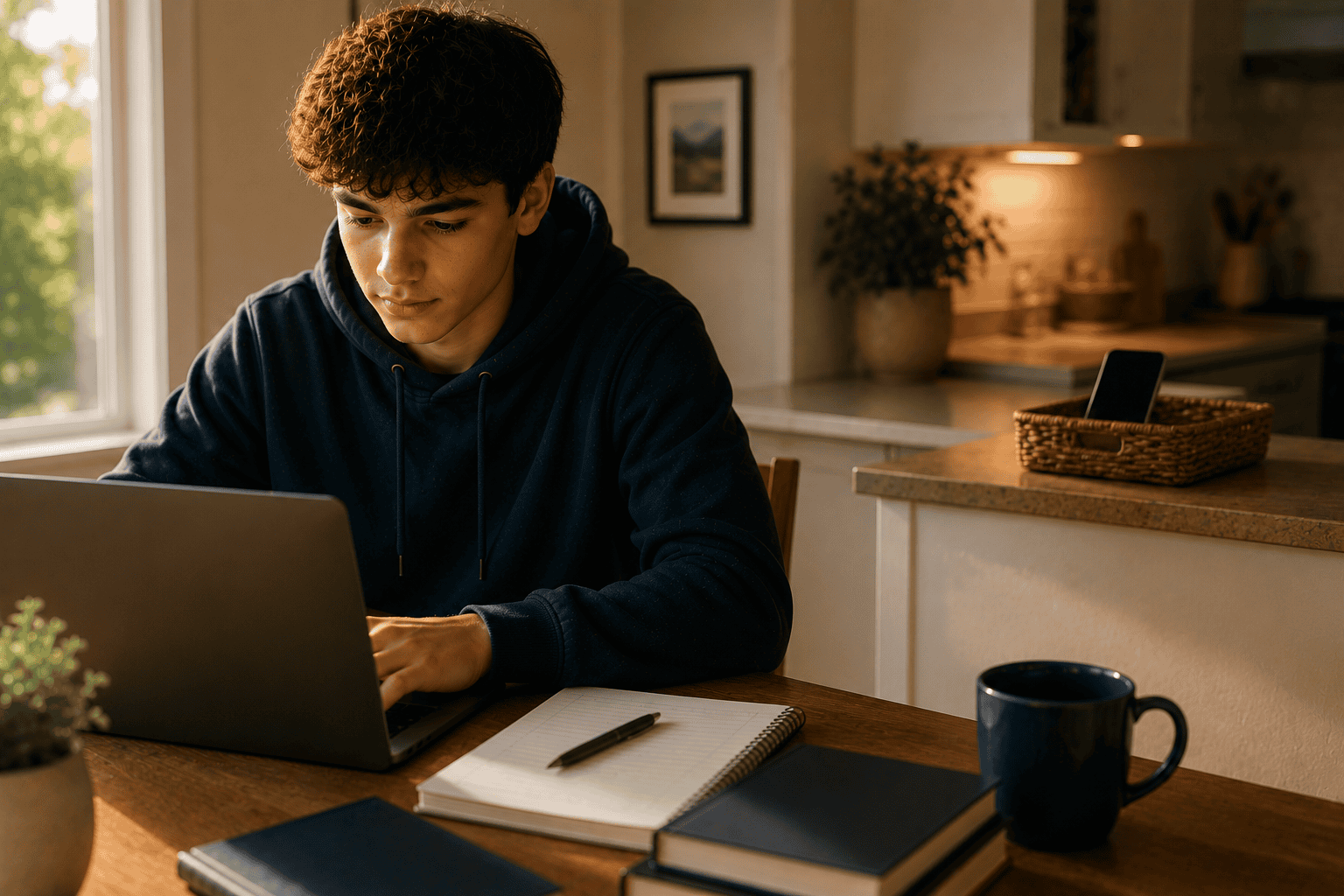
What’s Actually Happening
This isn’t a discipline contest between you and your child. It’s an attention contest between your child and several thousand engineers whose entire job is making the feed unputdownable — and your child’s still-developing focus and impulse control are the battlefield. Framing it that way changes everything: a student who can’t resist the phone isn’t defying you; they’re losing to a machine designed to beat adults. The fix isn’t more willpower. It’s better architecture — because every notification during homework doesn’t just cost the glance, it costs the twenty-plus minutes real refocus takes.
What Actually Helps
Separate the tool from the toy. Homework happens on the needed device only, with the phone in another room — not face-down, not in the pocket; another room. Studies keep finding that a merely visible phone taxes attention. This one move typically shortens homework more than any nagging campaign ever has.
Make it a house norm, not a kid punishment. “Work hours” where devices rest in a common spot — ideally including a parent’s phone — lands as culture. The same rule aimed only at the child lands as surveillance and breeds workarounds.
Structure beats monitoring. Focused work sprints with honest screen breaks (see our focus guide) give the brain what it’s actually craving — relief on a schedule — and make the deal enforceable by a timer instead of by you.
Negotiate the system once, in daylight. A calm weekend conversation that produces written house rules beats three hundred doorway skirmishes. Include your student in building it; people defend systems they helped design.
When to Bring in Help
If screens have become the visible symptom of an invisible pile — missing assignments, late starts, cratering grades — the screen fight is usually downstream of weak work systems. Students disappear into feeds partly because the work feels unstartable. A DES coach rebuilds the work side: clear plans, shrunk first steps, sprint structures, weekly accountability. When the work becomes doable, the screen’s gravitational pull weakens measurably. That’s executive function coaching — and it beats another parental-control app every time. The AAP’s healthychildren.org also maintains family media-plan tools worth a look.
What about phones during homework breaks?
Breaks are for recovery, and the phone does not provide it – fifteen minutes of scrolling leaves attention more scattered than when the break began. Better break menu: food, movement, music, outside. The phone stays parked until the session ends, and the session ends sooner when breaks actually restore instead of re-scatter.
Ready to stop being the screen police?
Screen Time and Schoolwork FAQs
Should I use parental control software?
As scaffolding for younger students, reasonable. As the whole strategy, it fails on schedule — teens out-engineer it, and it builds zero self-regulation. Pair any controls with a planned handoff to self-managed systems.
My student says they need music or “background” YouTube to work. True?
Test it, don’t debate it: one week with, one without, compare the actual output. Lyric-free audio sometimes helps; video “background” almost never survives the test.
Is gaming after homework a fair reward?
Yes, with a clean boundary: work sprint first, screen break measured by a timer the student sets. The order matters — screens-first evenings rarely produce a second act.
What about school-issued laptops with everything on them?
Work in shared spaces during the adjustment period, use the school’s focus modes where available, and lean on sprint structure. The skill goal is the same: attention that survives an open browser.