
Executive Function Coaching for High School Students
The report card says one thing. You know your teenager is capable of something entirely different.
Diversified Education Services provides one-on-one executive function coaching for high school students in Greenwich, CT, Westchester County, NY, Manhattan, and Boca Raton, FL, and online everywhere else. Since 2009, we’ve specialized in a particular kind of student: the teenager everyone agrees is exceptionally bright, whose grades, follow-through, and confidence haven’t caught up to their intelligence.
Schedule a Complimentary Consultation →
When the Smartest Kid in the Room Stops Turning Things In
There is a student every teacher recognizes. The one who aces the test but never submitted the homework that led up to it. The one who can argue a point brilliantly in class discussion, then produces a rushed, two-paragraph essay at 1 a.m. the night it’s due. The one whose conferences always include the phrase “if only he applied himself.”
Many of the high school students we coach have tested into gifted programs, carry exceptional IQ scores, or have been called “the smart one” their whole lives. Some have a diagnosis such as ADHD, a learning difference, or anxiety, and are what specialists call twice-exceptional (2e): intellectually gifted and navigating a real challenge at the same time. Others have no diagnosis at all. Nothing on paper explains why a student this capable is producing work this far below their ability.
Here is what we’ve learned since 2009: the explanation is almost never motivation, and it is never laziness. We don’t believe in “lazy.” Exceptionally bright students often reach high school without ever having needed to plan, organize, or study. Raw intelligence carried them through every earlier grade. High school is where that stops working. The gap between their potential and their output isn’t a character flaw. It’s a missing skill set, and skills can be built.
Why High School Exposes the Gap
High school is the first environment deliberately designed to exceed what intelligence alone can handle. Five to seven courses run simultaneously, each with its own teacher, expectations, and platform. Major assessments are announced weeks out and require planning backward. Long-term projects have no nightly homework attached to keep a student on pace. Honors and AP courses assume the studying happens without anyone checking.
For a student who has always been able to hold everything in their head, this is precisely the moment the head stops being enough. And the stakes rise at the same time: every semester now lives permanently on a transcript that colleges will read. Bright students feel that pressure acutely. Many respond with perfectionism, avoidance, or the quiet decision that it’s safer not to try than to try and fall short of “gifted.”
Who We Work With
- Gifted and high-IQ underachievers: students with exceptional ability whose grades, effort, or follow-through don’t reflect it
- Twice-exceptional (2e) teens: gifted students who also have ADHD, dyslexia, anxiety, or another learning difference
- Bright students with no diagnosis: nothing “explains” the struggle, but the missing assignments and late nights are real
- Students whose grades have started sliding: including those on academic warning or at risk of losing honors placement
- Strong students who want more: capable teens preparing for the jump to AP courses, leadership roles, and college-level independence
What Executive Function Coaching for High School Students Works On
Coaching sessions use your student’s real courses, real assignments, and real deadlines, never worksheets about hypothetical ones. Depending on the student, we build:
- A planning system that actually gets used: one trusted place where every assignment, assessment, and commitment lives
- Backward planning for major work: breaking essays, labs, and projects into scheduled steps instead of one looming deadline
- Study methods that fit how they think: bright students often never learned to study; we replace rereading with retrieval, practice, and spaced review
- Task initiation and procrastination tools: getting started without the adrenaline of a due date
- Self-advocacy: emailing teachers, clarifying expectations, and recovering from a missed deadline instead of hiding from it
- Self-monitoring and honest check-ins: the executive function skill that turns all the others into independence
With or Without a Diagnosis
Families sometimes ask whether their teen “qualifies” for executive function coaching without an ADHD diagnosis. There is no qualification. Executive function skills such as planning, organization, time management, and follow-through develop unevenly in all teenagers, and in exceptionally bright ones the unevenness is often wider: a 17-year-old intellect managed by 13-year-old systems. If your student has a diagnosis, we coach with it in mind and coordinate with any professionals already involved. If they don’t, we coach the skills directly. The work looks remarkably similar, because the work is about building systems, not treating labels.
The College Runway
For many families, the urgency behind high school coaching is what comes next. College removes every scaffold at once: no parents, no daily class check-ins, no teacher chasing missing work. The students who struggle most in their first college year are frequently the brightest ones who never needed systems until they suddenly did. Building executive function skills in tenth or eleventh grade is the single best insurance policy for freshman year. When your student gets there, our Executive Function Coaching for College Students program continues the same approach on campus or virtually.
How Sessions Work
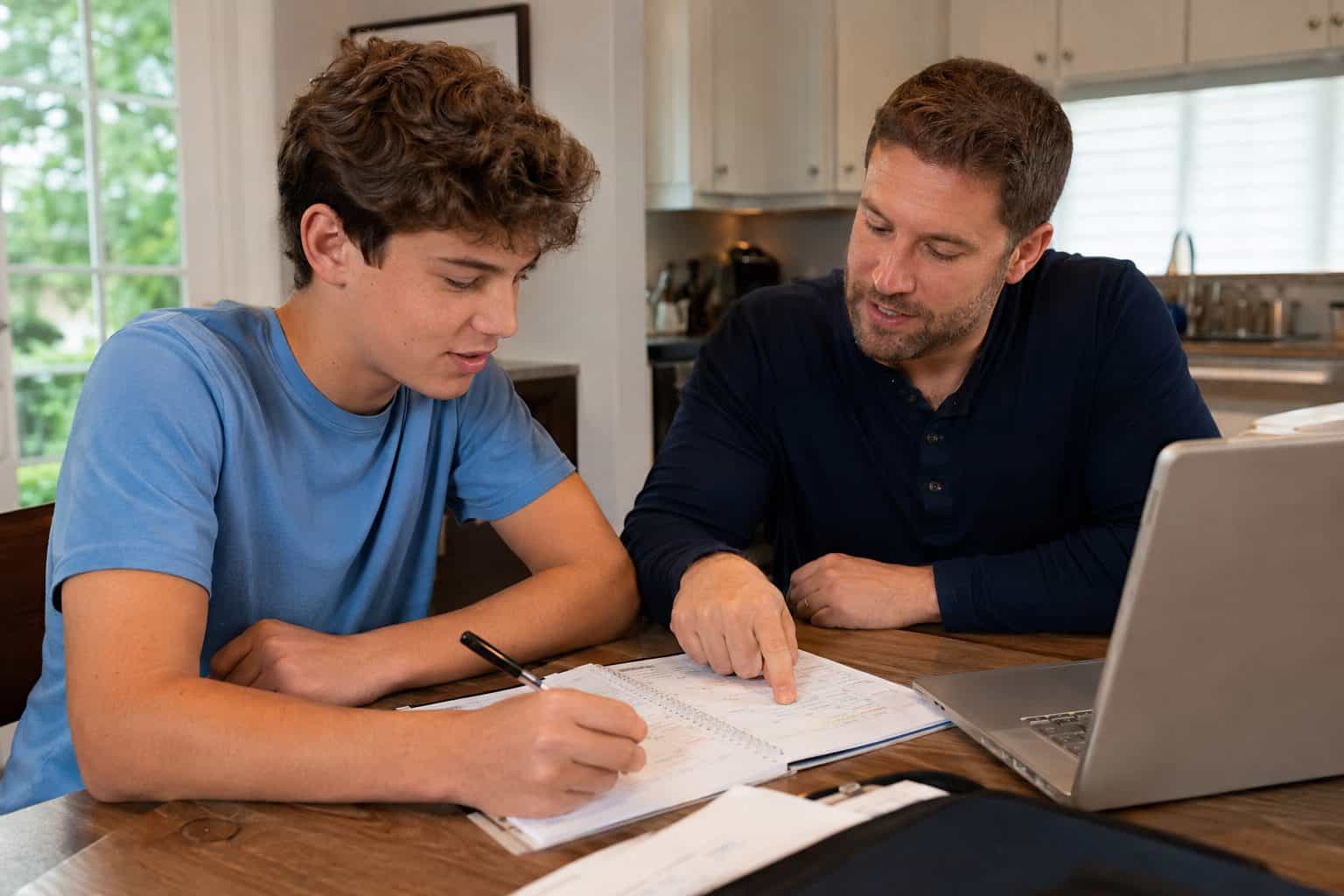
In executive function coaching for high school students, each student meets one-on-one with their coach weekly, in person in Greenwich, Westchester, or Manhattan, or virtually anywhere. Sessions combine planning for the week ahead, working through live assignments, and building the specific skills that student needs, with accountability structures between sessions so progress doesn’t evaporate on Thursday. Parents receive regular communication without being put in the middle. Coaching can stand alone or pair with Academic Tutoring when subject-specific support is also needed.
Why Families Choose DES
DES was founded in 2009 by Aron Boxer, M.Ed., S.P.E., a Forbes Coaches Council member who has spent his career working with bright students who weren’t reaching their goals. Our coaches are professional educators, not homework monitors. Families in Greenwich, Westchester, NYC, and South Florida choose us because we hold two truths at once: your teenager is genuinely exceptional, and they genuinely need help. Most support programs only believe one of those.
Related Resources
- Executive Function Coaching: our core coaching page
- Executive Function Coaching for Middle School Students: for younger siblings on the same path
- Executive Function Coaching for College Students
- Executive Function Knowledge Center and Parent Success Center
Executive Function Coaching for High School Students: FAQs
My teenager is clearly smart. Why would they need coaching?
Intelligence and executive function are different systems. One generates ideas; the other gets them planned, started, and finished. Exceptionally bright students often have the widest gap between the two, precisely because they never needed to build the second system until high school demanded it.
Does my student need an ADHD or other diagnosis to benefit?
No. We work with many students who have diagnoses and many who don’t. Coaching addresses skills, not labels, and the skills are the same either way.
How is this different from tutoring?
Tutoring teaches content: chemistry, calculus, essay writing. Coaching builds the systems around the content: planning, organization, studying, follow-through. Many bright students don’t need help understanding the material; they need help getting it done. When both are needed, we pair coaching with tutoring.
My teen says they don’t want help. Will this work?
Reluctance is normal, especially for students whose identity is built on being smart. Accepting help can feel like an admission. Our coaches are experienced at building buy-in by starting from the student’s own goals, not their parents’ worries. Many reluctant students engage once the week starts to feel more manageable.
What about a gifted student who also has ADHD or anxiety?
That combination, twice-exceptional or 2e, is one of our core specialties. 2e students are chronically misread: the giftedness masks the challenge, and the challenge masks the giftedness. We coach both realities at once and coordinate with therapists, psychiatrists, and school teams where relevant.
Is coaching available in person and online?
Yes. In-person coaching is available in Greenwich, CT, Westchester County, NY, and Manhattan; virtual coaching is available everywhere, including South Florida, and can work very well for high school students who are comfortable meeting online.
Is executive function coaching a real thing for high school students, and who do we hire?
It is, and it is most of what we do. You start with a call with our founder, Aron Boxer, who takes every first consultation himself. We then match your teenager with a coach; every DES executive function coach is a certified special education teacher. Sessions can usually start within a week or two of that call.
What does the coach actually work on each week?
The same things every week, until they stick: opening every class portal and syllabus so nothing is tracked from memory, putting assignments, tests, and long-term projects on one calendar, starting the most avoided task during the session, and checking what got done since last time. Study skills come up inside the real work, such as how to prepare for this test or break down this paper.
How is this different from a homework coach or a study-skills class?
A homework coach sits with a student while the work gets done. A study-skills class teaches methods in general. Executive function coaching builds the system a specific student will run on their own, and holds them to it week after week, so the goal is a teenager who no longer needs the coach.
Is junior year too late to start?
No. Tenth and eleventh grade are common starting points, because the workload jumps and college is in view. A junior who builds these habits now arrives at college with a system already running; see our executive function coaching for college students for what continues on campus.
Get Started
If you’re tired of watching a gap grow between who your teenager is and what their transcript says, let’s talk. A complimentary consultation takes twenty minutes and will give you a clear picture of whether coaching fits.